Judging Freeze-Dried Peptide Quality: Powder and Solution
Freeze-drying, or lyophilization, removes water from a peptide so it can be shipped and stored as a dry cake that holds up far longer than a liquid. Whether that cake was made well, and whether it behaves properly once dissolved, says a lot about the material you have received. This page walks through the visual and simple bench checks for both stages, explains the quality failures they can point to, and lists practical ways to reduce those risks. One caveat up front: looking at a vial is a supplement to analytical work, not a substitute for it. Read our third-party testing guidance and treat everything below as a second layer on top of lab results.
Reading the dry vial
A surprising amount can be learned before any solvent is added. Focus on the color, texture and dryness of the cake or powder.
Signs of a well-made cake
- Even, white and consistent: Good material looks the same throughout, a smooth white powder or cake without coarse crystals or patches of color. A cake that has cracked or crumbled into pieces is not a warning sign by itself; pucks routinely break apart in transit and handling.
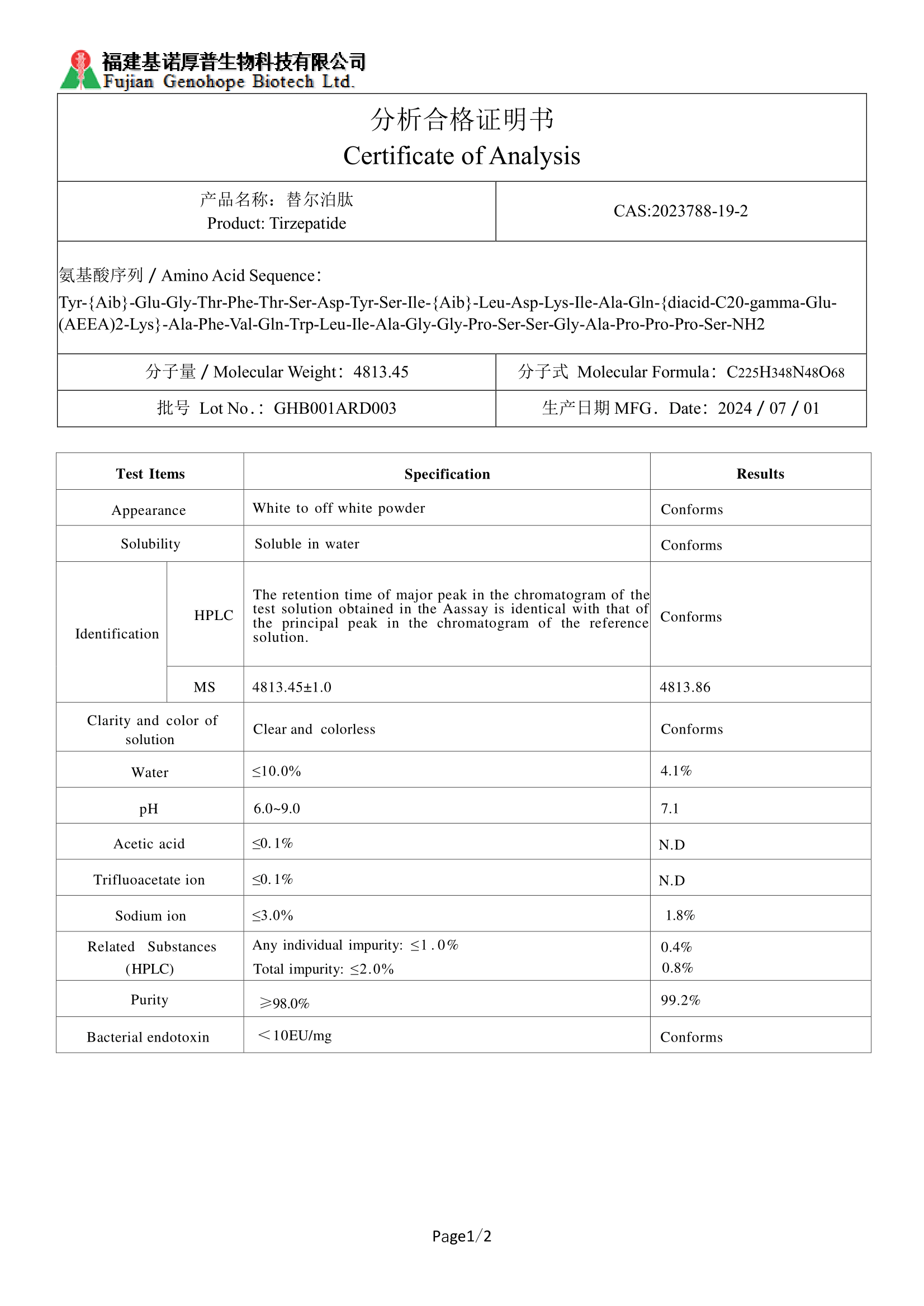
- Bone dry: Nothing should look damp, glassy or crystalline. As a reference point, freeze-dried peptides are generally expected to hold less than 3% water (source), although that figure is hard to verify outside a lab. Raw tirzepatide API carries a looser specification of under 10% water (source).
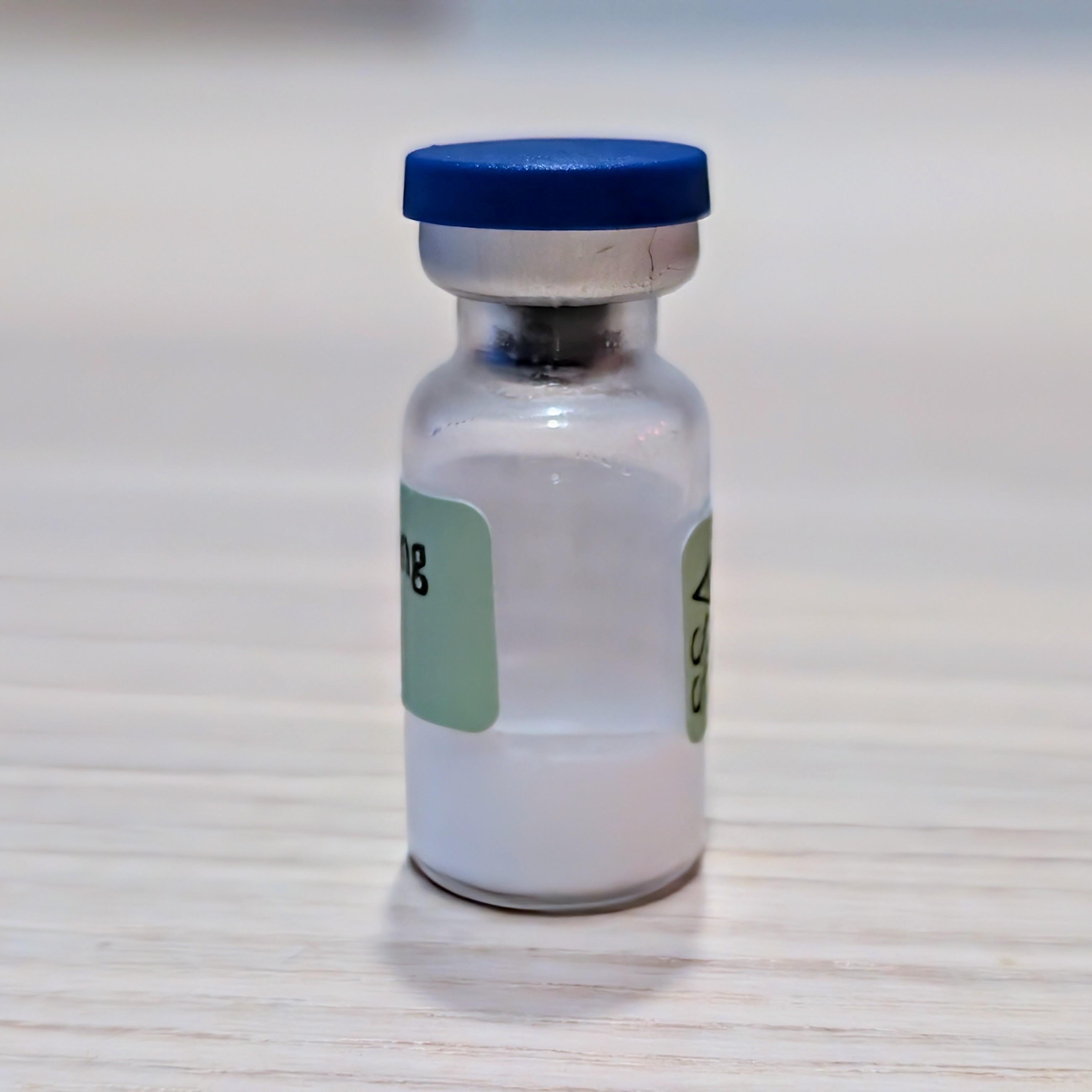
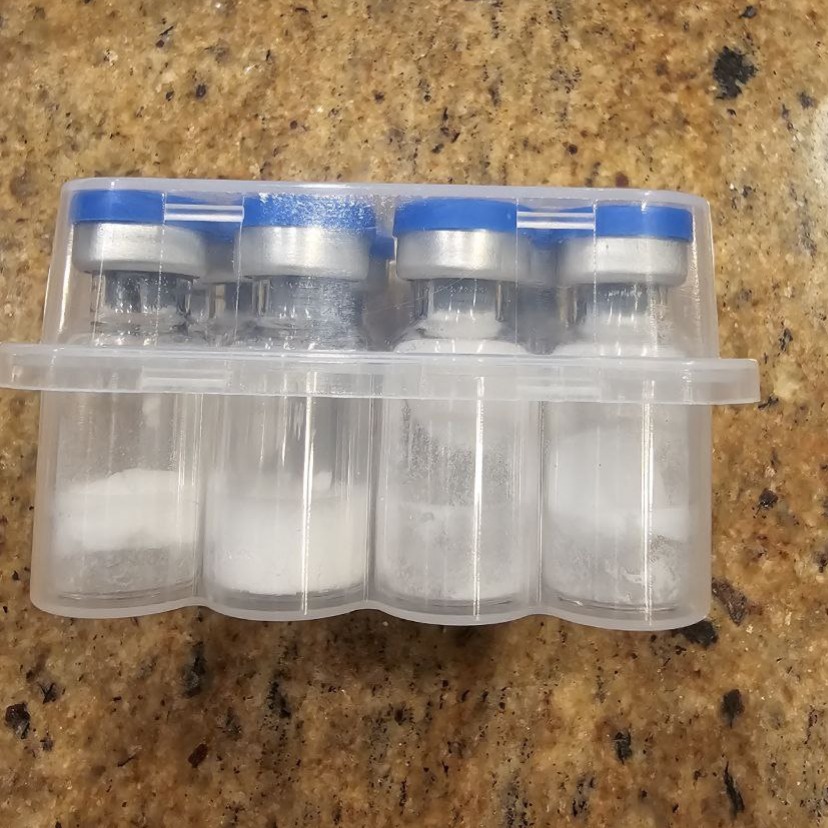
Signs that something went wrong
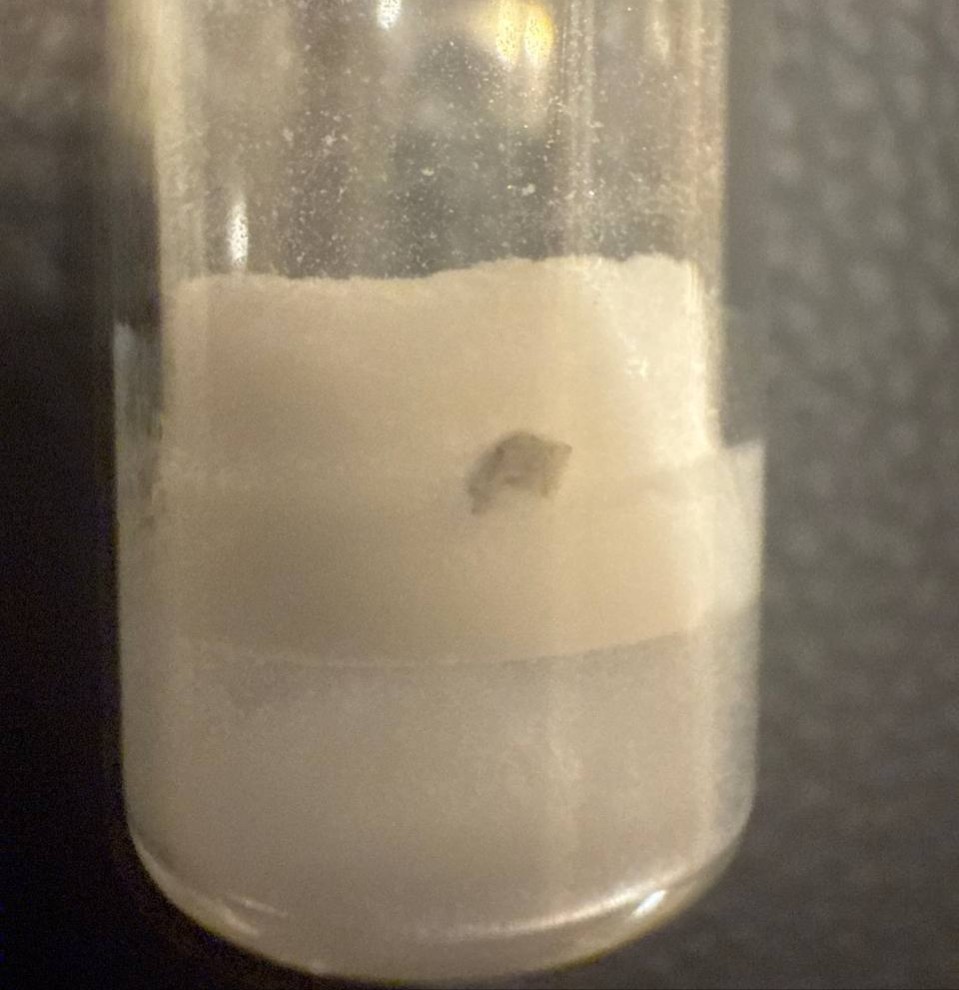
- Color or foreign matter: Yellow or brown tints, specks, fibers or any visible particles suggest degradation or a contamination problem during manufacture. A few products are colored by design, for example the Glow blend, which is meant to be blue, so compare against what the listing describes. Otherwise, discard the vial.
- Damp, tacky or clumped: A cake that looks wet, sticky, or has formed a thick granular film on the glass has taken on moisture. Water speeds up chemical breakdown, so this material is unlikely to match its label. Discard it.
Reading the dissolved solution
After reconstitution, clarity, color and pH give a second, independent view of quality and of how stable the solution is likely to be.
What a sound solution looks like
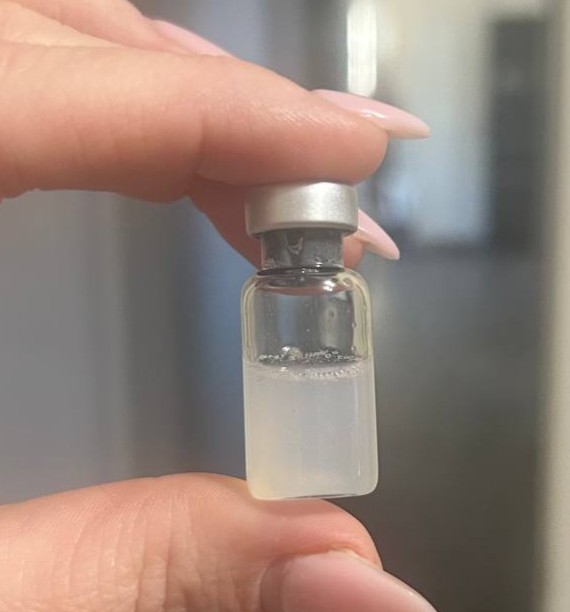
- Water-clear, no color: The liquid should be transparent and colorless, with no haze and nothing floating in it. That is consistent with the peptide having fully dissolved and with an absence of obvious contaminants.
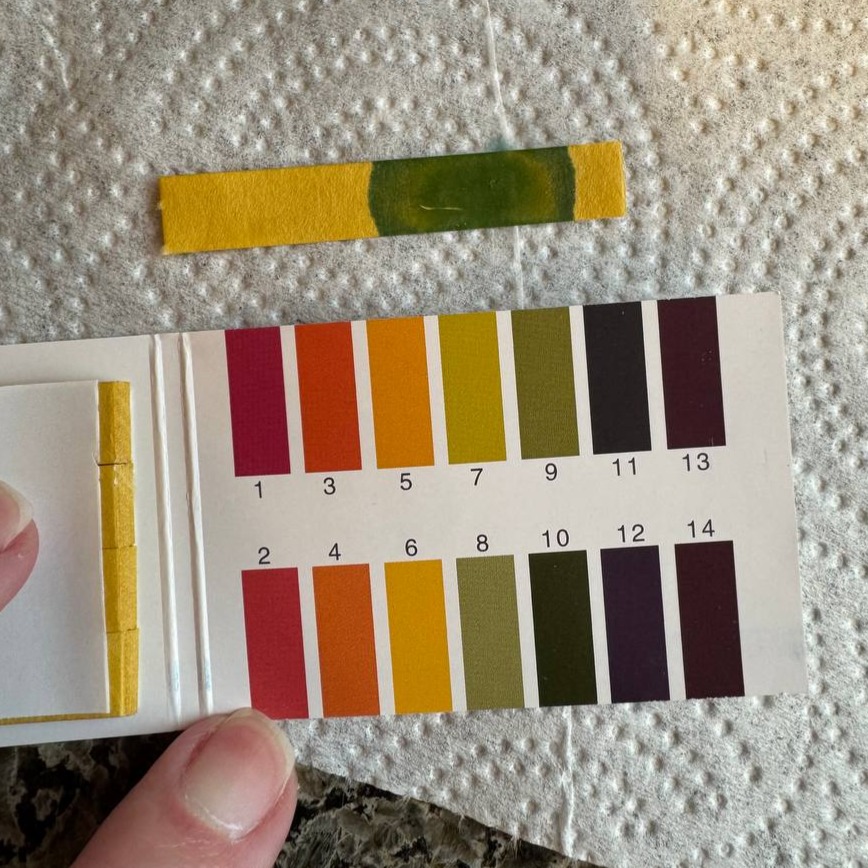
- pH inside the expected window: Each peptide has a specified pH range for a stable solution. For tirzepatide and retatrutide this typically sits around pH 6–9 (source). A quick strip or meter reading that lands in range is a good sign the material and solvent are what they should be, and that the solution is less prone to degrading or aggregating.
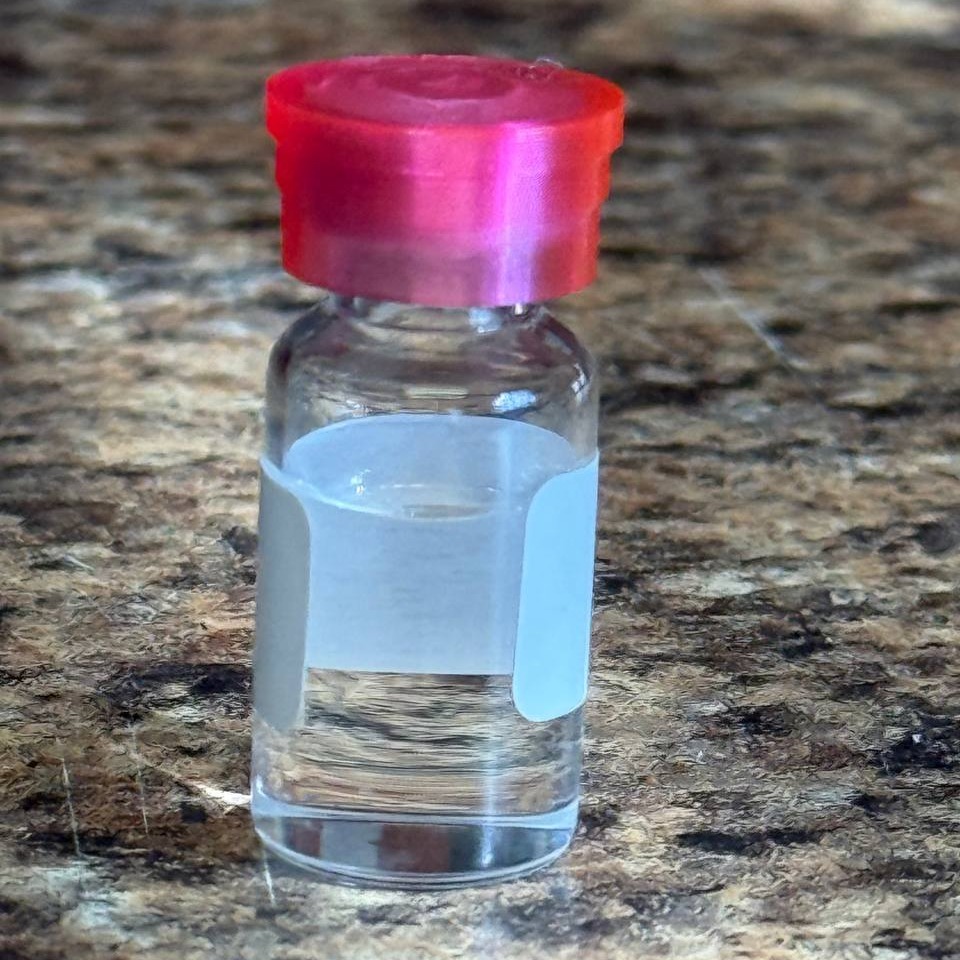
Warning signs in solution
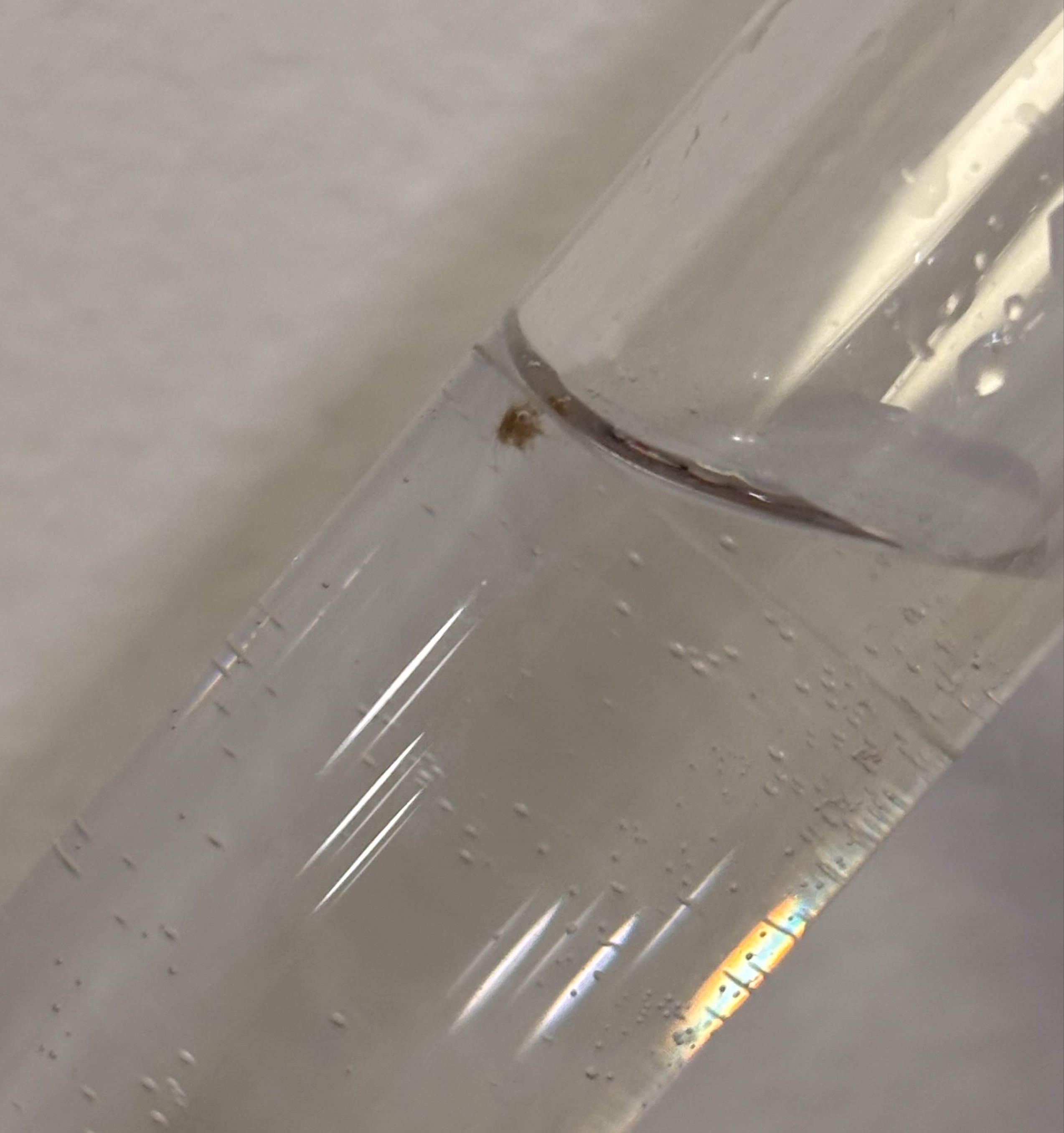
- Haze, tint or floaters: A cloudy or colored liquid, or one with suspended particles, may mean the peptide never went into solution or that impurities are present. Either can trace back to poor manufacturing or a compromised batch. If it still has not dissolved after 30 minutes, discard it.
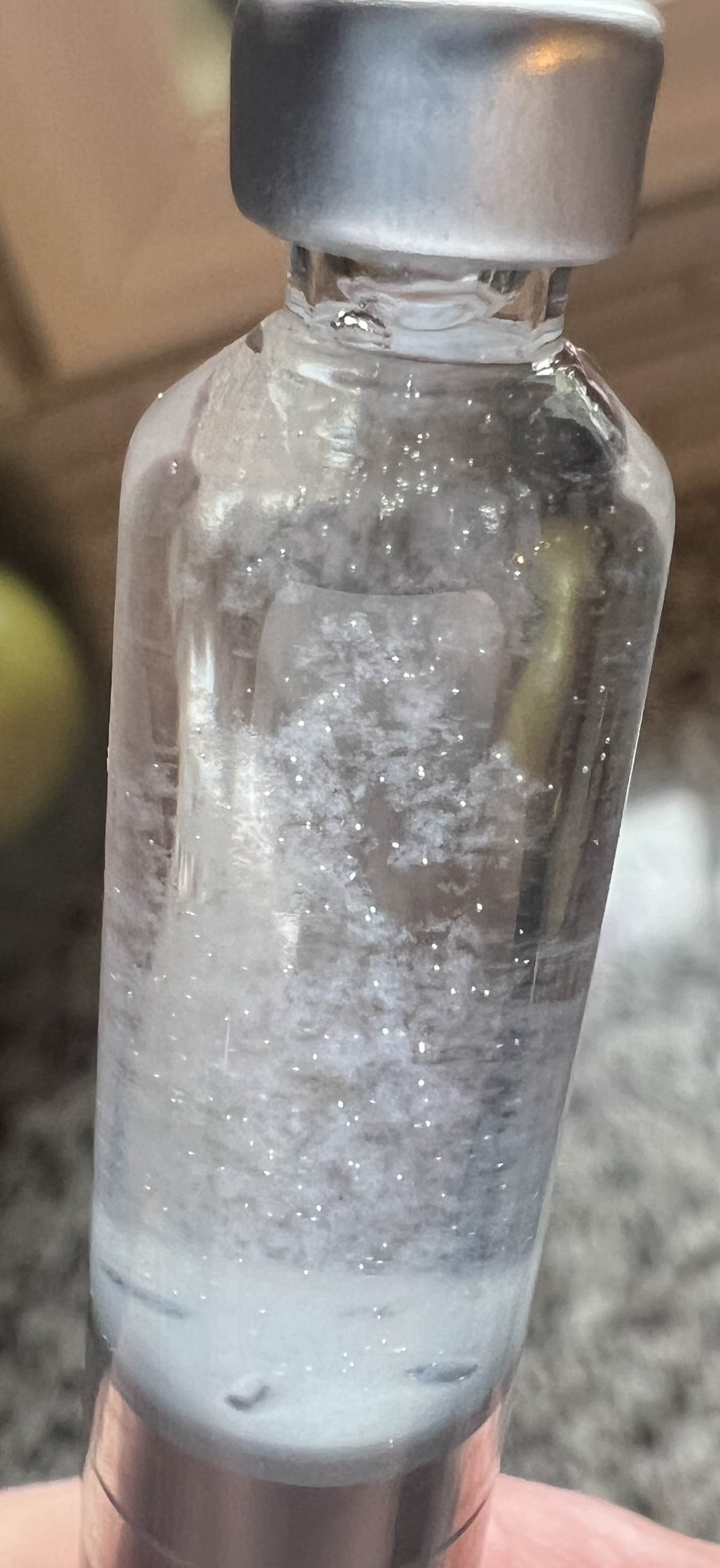
- Gel or precipitate: A solution that thickens into a gel is showing a change in the peptide’s secondary structure, known as aggregation. Aggregated material may no longer interact with its target receptors as intended and is associated with the quality problems described in the next section. Discard it.
- pH far from target: A reading well outside the peptide’s specified range points to the wrong material, the wrong solvent or degradation. Formulation literature generally treats roughly pH 4–9 as the outer working band for formulated peptide products (source). A result beyond that band, or one that does not match the listing, is reason to set the vial aside rather than try to correct it, unless buffering peptides is something you already know how to do.
What poor material can mean for quality
Badly made or badly stored peptides fail in a few recognizable ways (source):
Structural damage and immunogenicity concerns: Aggregation (seen as gelling), chemical degradation such as deamidation (often revealed by a lower HPLC purity result), undissolved material, and microbial growth in a solution that has been kept too long all change what is actually in the vial. In the biologics literature, altered or aggregated protein and peptide products are a well-documented source of unwanted immune reactions, including antibodies that can cross-react with similar natural peptides. That concern is why anti-drug antibody (ADA) assessment has become a routine part of many biologic clinical programs (source, source).
Loss of activity or off-target behavior: A peptide with a changed structure may simply stop working as designed, or it may bind receptors it was never meant to reach. In research terms, that means results that cannot be attributed to the compound on the label. The most benign outcome is an inert sample that does nothing at all (source).
Unstable or mismatched solutions: A solution whose pH sits outside the specified range is more prone to breakdown and aggregation; GLP-1 class peptides, for example, are typically kept between pH 6 and 9 for stability. An unexpected reading can also be the first hint of mislabeling, meaning the vial holds a different compound, salt form or solvent than advertised. Look up the specified range for the exact peptide before you reconstitute it (source).
Lowering the odds of a bad vial
None of these steps is perfect alone. Together they make it much harder for a poor batch to slip through.
Start with sellers who have a track record: Reputation within the research community is a reasonable first filter. On GLP1 Forum Escrow, brands are vetted and many listings link independent lab reports you can read before buying. Ignore unsolicited DMs from strangers offering to sell you something; that is a common route to counterfeit or mislabeled product.
Get the material tested: Identity, purity and potency (the actual mass fill) can only be confirmed by sending a sample for third-party (3P) analysis. Our Testing 101 guide explains which tests are worth ordering and at what point.
Check every vial, every time: Look at the dry cake on arrival and again at the solution after reconstitution. Gel, haze or particles in either stage are reason enough to discard it. A sample that fails a visual check is not worth putting into further work.
Store it cold, dry and dark: Freeze-dried peptides keep best in a cold, dry spot out of direct light, and should only be dissolved shortly before they are needed, since solutions degrade faster than dry powder. For long-term storage, keeping lyophilized kits frozen at -80°C to -20°C (-112°F to -4°F) extends their shelf life (source).
Use the documented solvent for each peptide: Reconstitution guidance differs from one peptide to the next, and the wrong dilution or pH can push a solution toward gelling and aggregation. GLP-1 class peptides are generally documented as dissolving in bacteriostatic water alone, while others call for acetic acid or another solvent to hold the pH in range.
The short version
Good quality control for freeze-dried peptides rests on a few habits: buy from established, vetted brands, verify purity and mass fill through independent testing, look closely at both the powder and the solution for aggregation or contamination, and keep storage and reconstitution within each peptide’s documented conditions. Each habit catches problems the others can miss.
Questions, corrections or feedback about this guide or the sources it cites are welcome; reach out to our support team.
Your Cart
 Arctic Labs3 products · 3 lab-testedVisit store →
 AUverifiedPeptides9 products · 9 lab-testedVisit store →
 Azentra Laboratories1 product · 1 lab-testedVisit store →
 Biohack Peptides4 products · 4 lab-testedVisit store →
 BioPepta22 products · 20 lab-testedVisit store →
 Core Peptides10 productsVisit store →
 Cyprus Peptides93 productsVisit store →
 European Peptide Sciences34 productsVisit store →
 EuropePeptide13 productsVisit store →
 HK Peptide111 products · 53 lab-testedVisit store →
 HKTide Biotech1 productVisit store →
 HPEBIO20 products · 19 lab-testedVisit store →
 Imperial Peptides20 products · 15 lab-testedVisit store →
 InnoPeptide2 products · 2 lab-testedVisit store →
 Jinlu Peptides50 productsVisit store →
 JP8 products · 8 lab-testedVisit store →
 Kensington Biosciences26 productsVisit store →
 Lab77 Peptides33 products · 18 lab-testedVisit store →
 Lianhua Peptide Co.37 productsVisit store →
 Lilipeptide49 productsVisit store →
 Limitless BioChem2 products · 2 lab-testedVisit store →
 Maxed Out Compounds11 products · 9 lab-testedVisit store →
 MEI-PEPTIDE5 products · 5 lab-testedVisit store →
 MJT Peptides1 product · 1 lab-testedVisit store →
 Nouveaux2 products · 1 lab-testedVisit store →
 Peptide Express21 productsVisit store →
 Purus Peptides8 products · 8 lab-testedVisit store →
 SSRBIO69 productsVisit store →
 Sulan Bio46 products · 12 lab-testedVisit store →
 SynTide Research12 productsVisit store →
 TFC Peptides192 productsVisit store →
 TOP Peptide2 products · 2 lab-testedVisit store →
 Uther Peptide105 products · 87 lab-testedVisit store →
 UWA Biotech21 products · 20 lab-testedVisit store →
 Vital Edge Science14 products · 14 lab-testedVisit store →
 Zhejiang Peptide Co.2 productsVisit store →
 Zhuoyan Laboratory Peptide Co.1 product · 1 lab-testedVisit store →
 Zyn Pharma12 productsVisit store →Compare all brands →
All Categories
Search
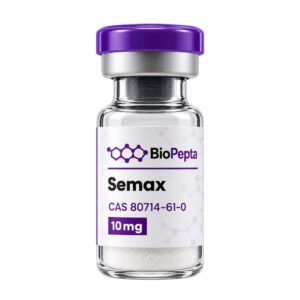
Semax 10mg (10 Vials / Kit)
$51.00 $0.51/mg
Selank 10mg (10 Vials / Kit)
$69.30 $0.69/mg
About an order? Include your order number. We never ask for passwords or seed phrases.
Before you enter
GLP1 Forum Escrow lists research peptides for laboratory and educational use only. Nothing on this site is medical advice or intended for human consumption.
By continuing you confirm that you are 21 or older and agree to our Terms of Service.