Testing 101
Choosing the right tests and lab, and reading the certificate you get back.
Judge the vial by its data, not its label.
A working guide to choosing tests, picking a lab and making sense of the certificate you get back — written by the research community and tied to the lab reports listed here.
What is testing?
A lab test checks whether a product matches an expected standard for identity, makeup and quantity. Those measurements, rather than anyone's word, are the proper basis for confidence in a vial.
- Commissioned and funded by whoever is selling the vial
- Frequently covers a whole lot rather than your specific vial
- Open to conflicts of interest
- You choose the lab and submit the exact vial delivered to you
- Verifies the compound is correct and that the active ingredient (API) is present in the stated quantity
- Hard evidence to back an escrow claim
Group testing
Buyers holding one batch each submit a vial and divide the fee. Each pays less, and the result describes the batch far more reliably.
- Reflects the whole lotA single vial that comes in 5% light is not conclusive — its neighbors could match or exceed the label. Testing several gives a meaningful average mg figure across the batch.
- Lower cost per personSplitting the fee puts purity, mass and endotoxin panels within reach of every participant.
- Members set the termsA group can hold results back for a short period so contributors benefit first, publish them immediately, or keep them private for good. Pooled brand data ultimately serves everyone researching these compounds.
Which tests to order
At one time or another, nearly every vendor has shipped the wrong peptide, an inaccurate fill or material that had broken down — typically traced to weak quality checks, poor starting material or careless finishing steps. Below is what to screen for and how regularly.
Why it matters
A high purity figure points to clean synthesis and a peptide that has held up well, with little deamidation. The mass result shows whether the labeled quantity is really present. Request the raw chromatogram data so anyone can verify the number. For background on how purity is discussed across the research-peptide market, see this guide .
Why it matters
Endotoxins, chiefly lipopolysaccharides (LPS) shed by gram-negative bacteria, are not expected to arise during solid-phase peptide synthesis itself. Still, few vendors publish details of their production environment or controls, so a Limulus Amebocyte Lysate (LAL) assay is how you verify that levels fall within limits.
Why it matters
The TFA salt costs less to produce than the sodium or acetate forms, and it is generally regarded as the less desirable form of research material. Running an NMR F-19 check from time to time catches a brand that has changed salt forms without saying so. See Residual Solvents for more.
Why it matters
No amount of heavy-metal contamination is considered acceptable in a peptide. Screening at intervals verifies that none is present and gives an extra measure of assurance.
Before ordering, look through the Test Data spreadsheet — your brand may already have a recent result on file.
The detail
A sterility test holds a sample in culture media for roughly two weeks to see whether anything grows, and a good share of vendors would not pass because of contamination introduced during production or handling. In the lab, aseptic handling and a 0.22 μm polyethersulfone (PES) filter reduce that risk. Microbial growth inside freeze-dried vials kept frozen is not considered a meaningful issue.
The detail
The Class 2 solvents common in SPPS (DCM, DCA, DMF, ACN, NMP) carry limited risk and are driven off by correct lyophilisation. Class 1 solvents have no known role in SPPS, and every one of them boils under 85 °C, so surviving vacuum drying is highly improbable (ICH Q3C ). A result showing no TFA is a strong sign that no Class 1 residue remains either.
Which lab to use
Plenty of local labs, university facilities among them, can handle HPLC and NMR. Those below are well regarded locally and overseas.
- HPLC: offered
- NMR F-19: offered
- Endotoxin: offered
- Heavy metals: offered
- HPLC: offered
- NMR F-19: not offered
- Endotoxin: offered
- Heavy metals: not offered
- HPLC: not offered
- NMR F-19: offered
- Endotoxin: not offered
- Heavy metals: not offered
Reading your results
The pass criteria for every test, the way labs arrive at each figure, and two calculators for checking a result yourself.
HPLC
HPLC reveals the quality of the synthesis and how far the peptide has degraded since — in short, its purity. Our benchmark is >98%, consistent with FDA-regulated 503A/B compounding practice. The same run quantifies API mass, where we accept ±10%, the tolerance many vendors already promise. For comparison, USP <905> permits ±15% variance across a batch, provided no individual unit strays more than ±25% from target.
Each method is tuned to a single peptide using a reference standard . When that peptide isn't in the sample, no peak shows up at all. When a peak does emerge at the expected retention time (RT), its area under the curve (AUC) is used to work out both purity and mass. Minor peaks close by are typically breakdown products (deamidation) or compounds of similar size, and most labs fold them into the purity figure.
Not every lab treats minor peaks the same way. Breakdown products are normally counted, peaks labeled "unidentified filler" are sometimes left out, and known excipients such as mannitol, added to stabilise the lyophilised cake, never enter the figure. Asking for the raw data is the easiest way to understand why two labs report different purity for the same material.
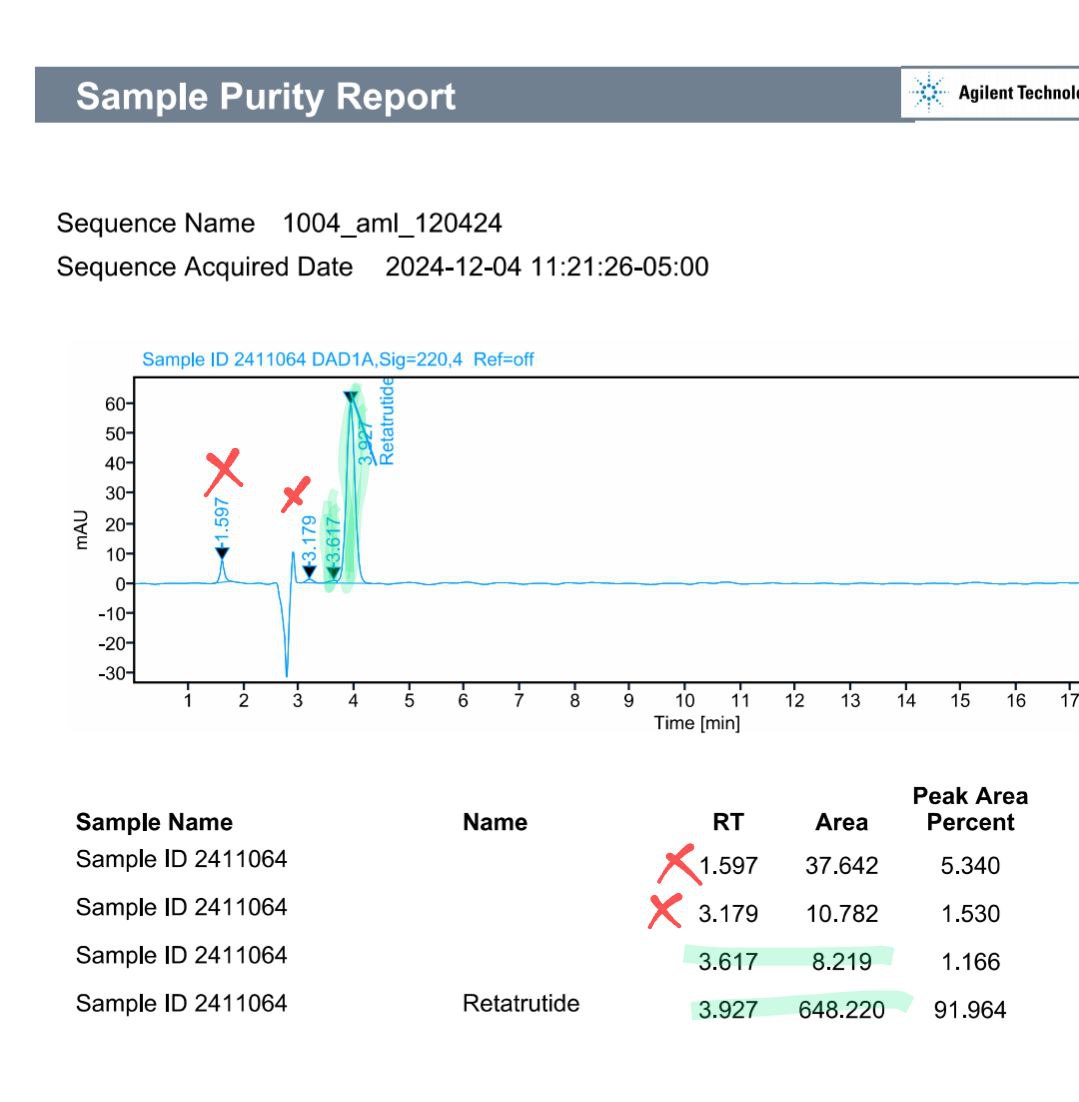
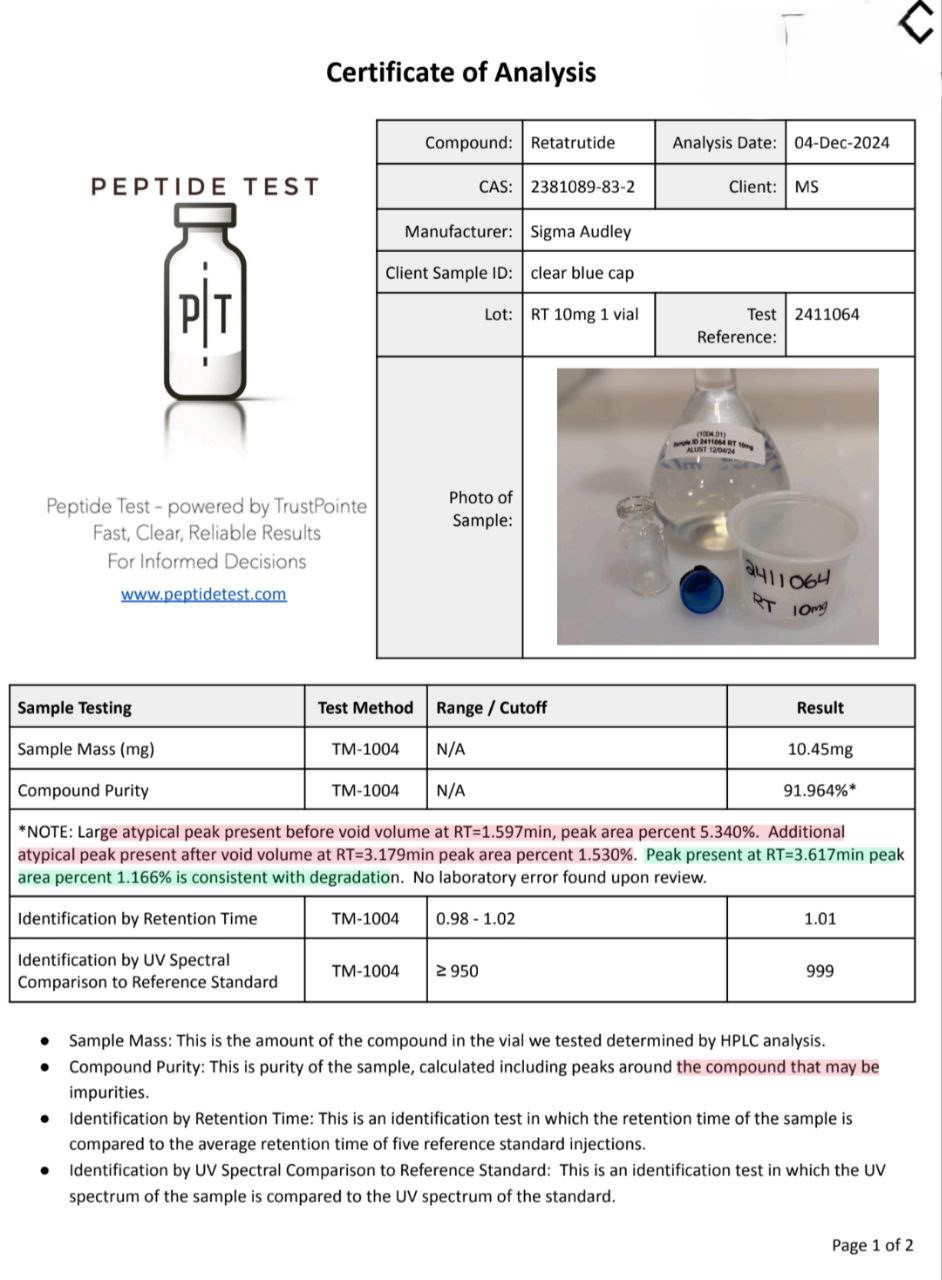
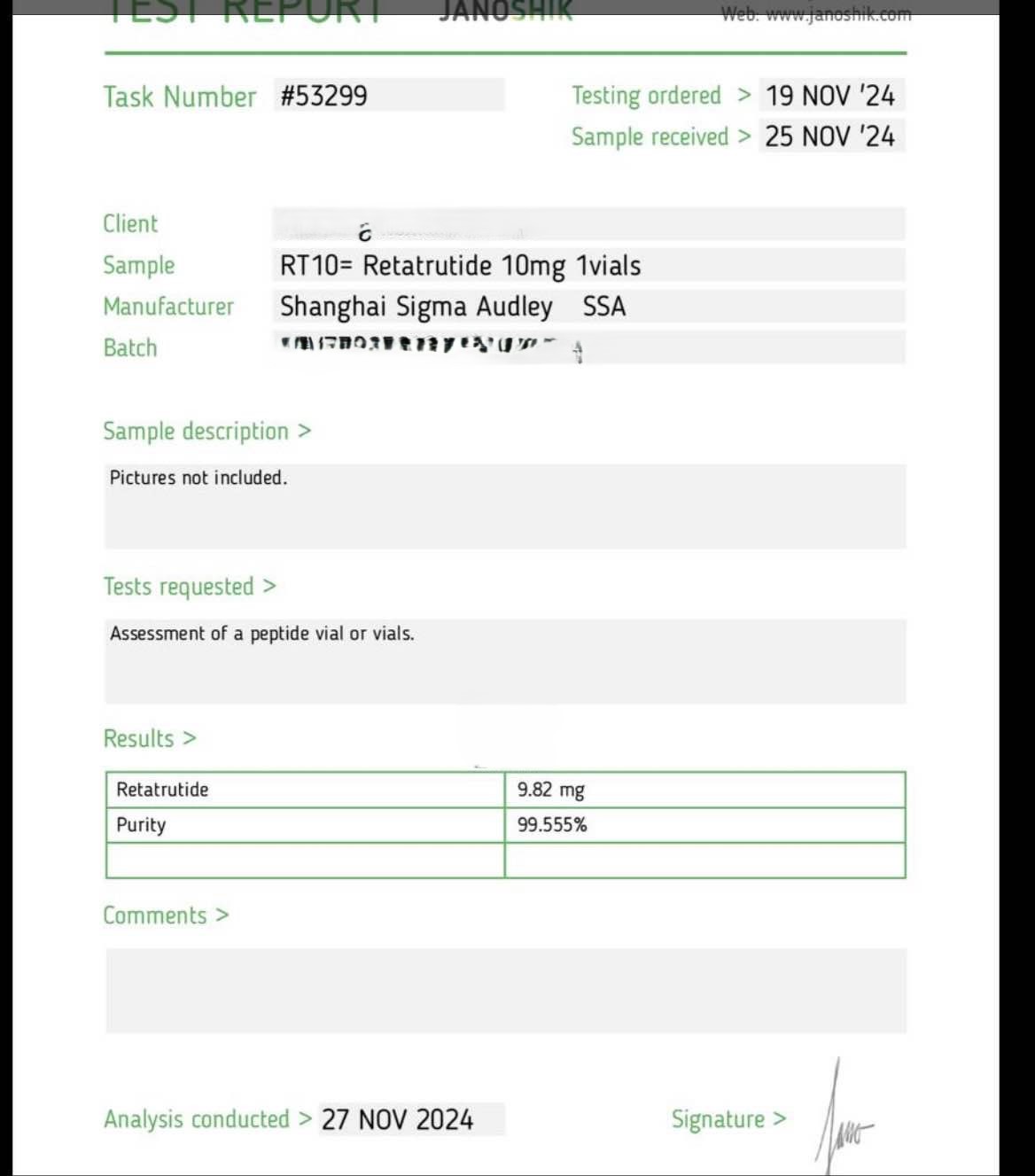
In this comparison, PeptideTest treated two minor peaks (37.642 and 10.782) as "unknown filler" and included them in its total, whereas Janoshik left them out. Subtract those two and the PeptideTest purity agrees with Janoshik's result to within ordinary measurement error:
648.220 ÷ (648.220 + 8.219) = 648.220 ÷ 656.439 = 98.75%* treated as filler in the PeptideTest total only.
NMR F-19
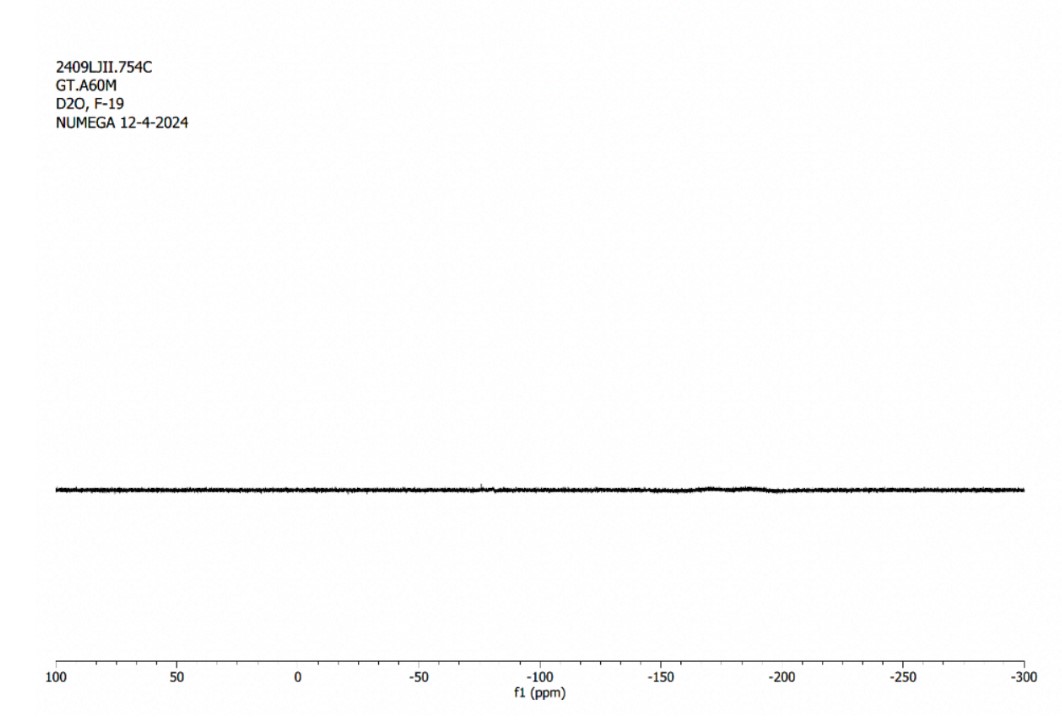
Fluorine-19 NMR identifies trifluoroacetic acid (TFA) and measures how much is present. Because each TFA molecule carries three fluorine atoms, it produces a sharp, very sensitive signal near −76 ppm, so the technique is well suited to spotting leftover TFA as well as material supplied as the TFA salt.
Endotoxin
The LAL assay picks up lipopolysaccharides — toxic fragments of bacterial cell walls — and reports them in endotoxin units (EU). FDA-regulated 503A/B pharmacies that source tirzepatide hold API to <10 EU/mg. USP additionally defines a 5 EU/kg body weight/hour ceiling, but that figure accounts for all endotoxin exposure across a time window, so the straightforward 10 EU/mg benchmark is the one we suggest (source ).
Gives one EU figure per vial.
EU/mg = X EU ÷ Y mg30 mg vial, 6 EU → 6 ÷ 30 = 0.2 EU/mg ✓
Gives EU per mL, after dissolving the sample in 2 mL.
EU/mg = X EU/mL ÷ (Y mg / 2 mL)30 mg vial, 8 EU/mL → 8 ÷ 15 = 0.53 EU/mg ✓
Reports on the marketplace
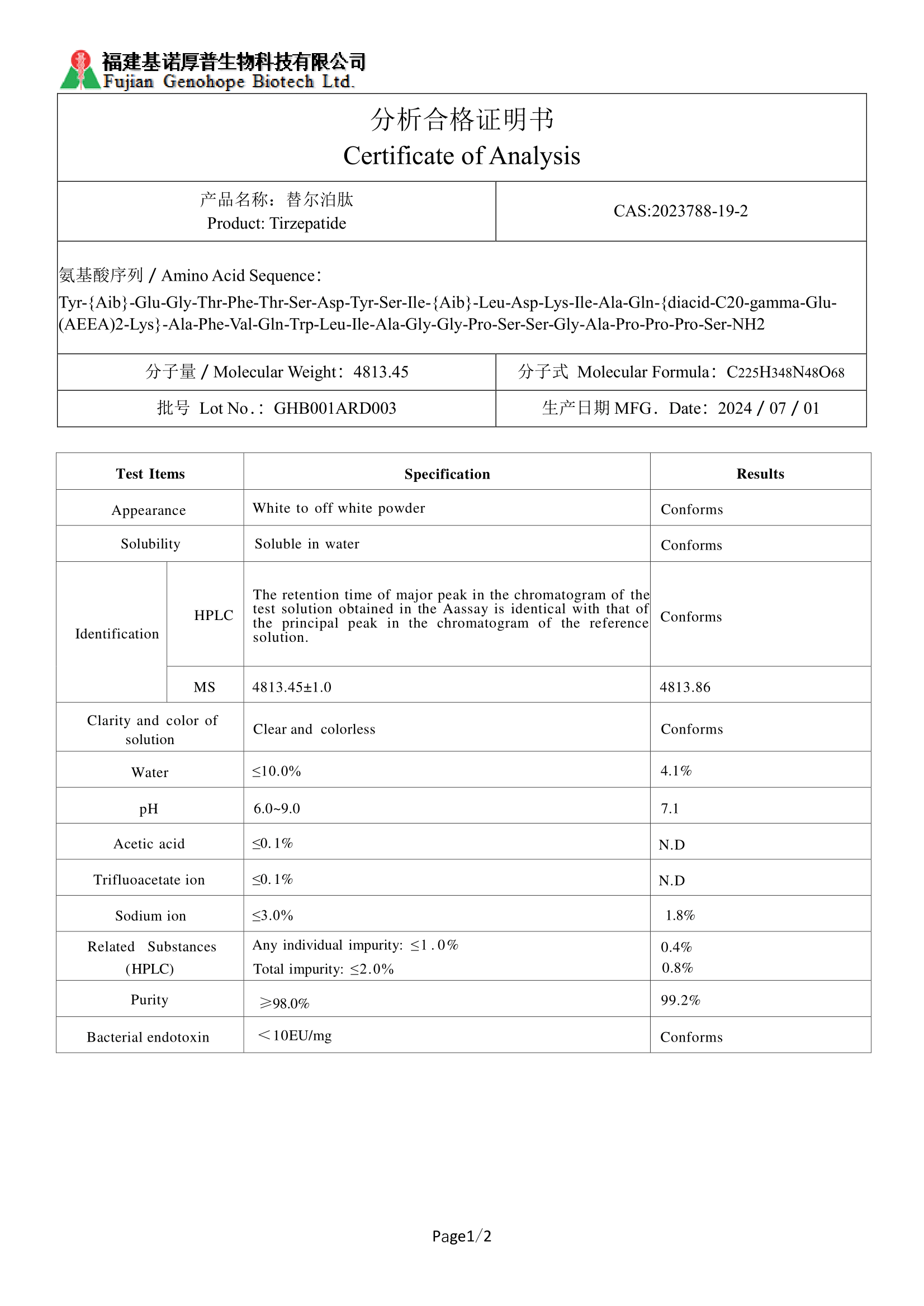
Every listing on GLP1 Forum Escrow shows its lab report next to the price — 276 reports across 314 listings so far. The newest:
If an independent test comes back failed while your order is still held in escrow — the wrong compound, or a substantial under-fill — you can open a claim on that basis. Funds are not released to the brand until the claim is settled.
GLP1 Forum Escrow buyer’s guide. Questions or feedback on the information or sources? Contact our support team. Not medical advice; for research and education only.
Your Cart
 Arctic Labs3 products · 3 lab-testedVisit store →
 AUverifiedPeptides9 products · 9 lab-testedVisit store →
 Azentra Laboratories1 product · 1 lab-testedVisit store →
 Biohack Peptides4 products · 4 lab-testedVisit store →
 BioPepta22 products · 20 lab-testedVisit store →
 Core Peptides10 productsVisit store →
 Cyprus Peptides93 productsVisit store →
 European Peptide Sciences34 productsVisit store →
 EuropePeptide13 productsVisit store →
 HK Peptide111 products · 53 lab-testedVisit store →
 HKTide Biotech1 productVisit store →
 HPEBIO20 products · 19 lab-testedVisit store →
 Imperial Peptides20 products · 15 lab-testedVisit store →
 InnoPeptide2 products · 2 lab-testedVisit store →
 Jinlu Peptides50 productsVisit store →
 JP8 products · 8 lab-testedVisit store →
 Kensington Biosciences26 productsVisit store →
 Lab77 Peptides33 products · 18 lab-testedVisit store →
 Lianhua Peptide Co.37 productsVisit store →
 Lilipeptide49 productsVisit store →
 Limitless BioChem2 products · 2 lab-testedVisit store →
 Maxed Out Compounds11 products · 9 lab-testedVisit store →
 MEI-PEPTIDE5 products · 5 lab-testedVisit store →
 MJT Peptides1 product · 1 lab-testedVisit store →
 Nouveaux2 products · 1 lab-testedVisit store →
 Peptide Express21 productsVisit store →
 Purus Peptides8 products · 8 lab-testedVisit store →
 SSRBIO69 productsVisit store →
 Sulan Bio46 products · 12 lab-testedVisit store →
 SynTide Research12 productsVisit store →
 TFC Peptides192 productsVisit store →
 TOP Peptide2 products · 2 lab-testedVisit store →
 Uther Peptide105 products · 87 lab-testedVisit store →
 UWA Biotech21 products · 20 lab-testedVisit store →
 Vital Edge Science14 products · 14 lab-testedVisit store →
 Zhejiang Peptide Co.2 productsVisit store →
 Zhuoyan Laboratory Peptide Co.1 product · 1 lab-testedVisit store →
 Zyn Pharma12 productsVisit store →Compare all brands →
All Categories
Search
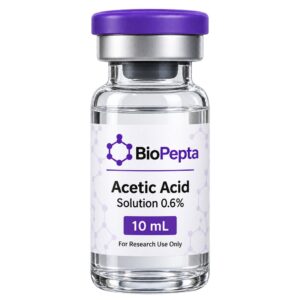
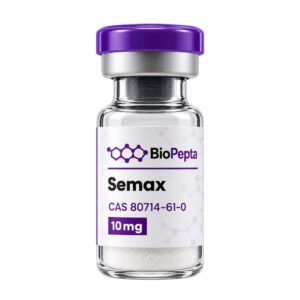
Semax 10mg (10 Vials / Kit)
$51.00 $0.51/mg
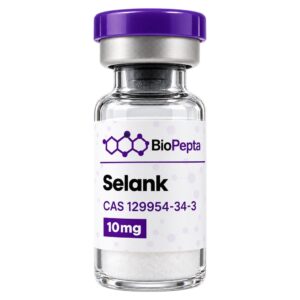
Selank 10mg (10 Vials / Kit)
$69.30 $0.69/mg
About an order? Include your order number. We never ask for passwords or seed phrases.
Before you enter
GLP1 Forum Escrow lists research peptides for laboratory and educational use only. Nothing on this site is medical advice or intended for human consumption.
By continuing you confirm that you are 21 or older and agree to our Terms of Service.